
Security Overview
Superman is designed to be secure by default. By taking a declarative approach to routing and configuration, it automatically enforces rate limits, scrubs error payloads in production, and standardizes how security incidents are logged.
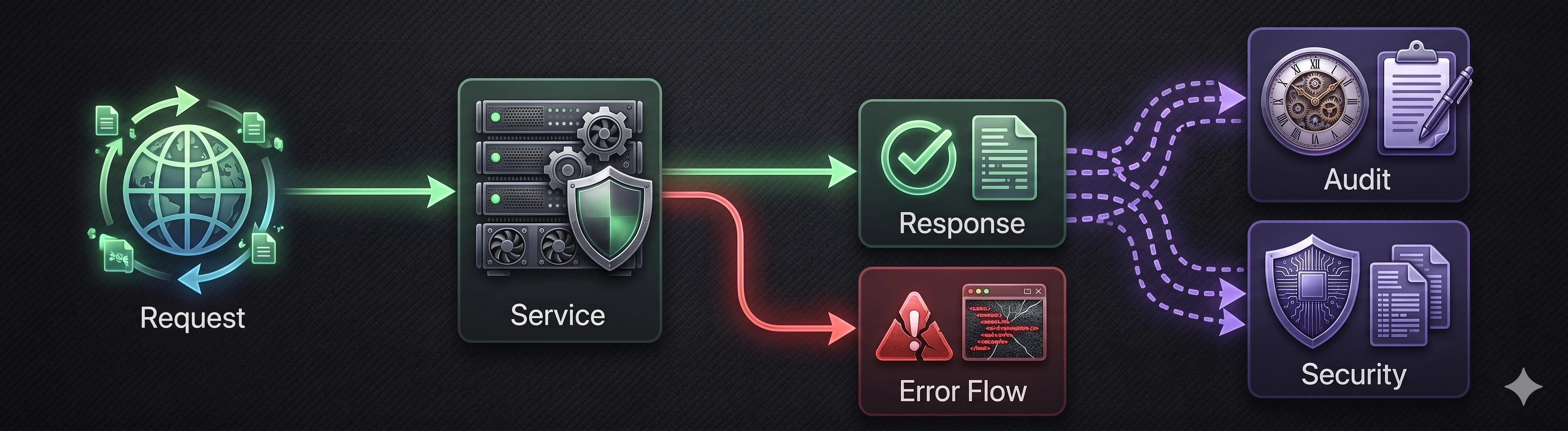
Rate Limiting (Throttling)
Denial of Service (DoS) and brute-force attacks are mitigated natively via the throttleConfig property on defineController.
Instead of applying limits imperatively across your app, simply state the limits upfront:
export const login = defineController({
  throttleConfig: { limit: 5, ttl: 60_000 }, // 5 requests per minute
  handler: async ({ body }) => { ... }
});
Or use predefined presets configured in defineConfig like 'STRICT', 'STANDARD', or 'PERMISSIVE'.
Error Masking
In production (NODE_ENV=production or ENV=production), Superman's globalExceptionMiddleware catches all unhandled exceptions.
If a generic 500 Internal Server Error occurs (e.g., a database connection drops or a variable is undefined), Superman automatically strips the stack trace and sensitive error messages from the HTTP response payload to prevent information leakage.
The full stack trace is still captured and logged centrally as an ERROR event.
Field Redaction
Even in secure backend environments, sensitive data like passwords, credit card numbers, or API tokens should never be written to your application logs.
Superman includes a powerful, deep-recursive field redaction engine built directly into the logger. By configuring redactFields for specific event types, the framework will intercept and mask sensitive payload keys with '***' before they ever reach your console or file sinks.
// src/server.config.ts
import { defineConfig, EventType } from '@supersec-ai/superman';

defineConfig({
  logger: {
    events: {
      include: [
        {
          type: EventType.REQUEST,
          // The framework recursively scans payloads and masks these exact keys!
          redactFields: ['password', 'creditCard', 'secretToken', 'cvv']
        }
      ]
    }
  }
});
Because redaction is strictly typed and integrated at the framework level, you never have to worry about developers accidentally logging a user's password in a controller!